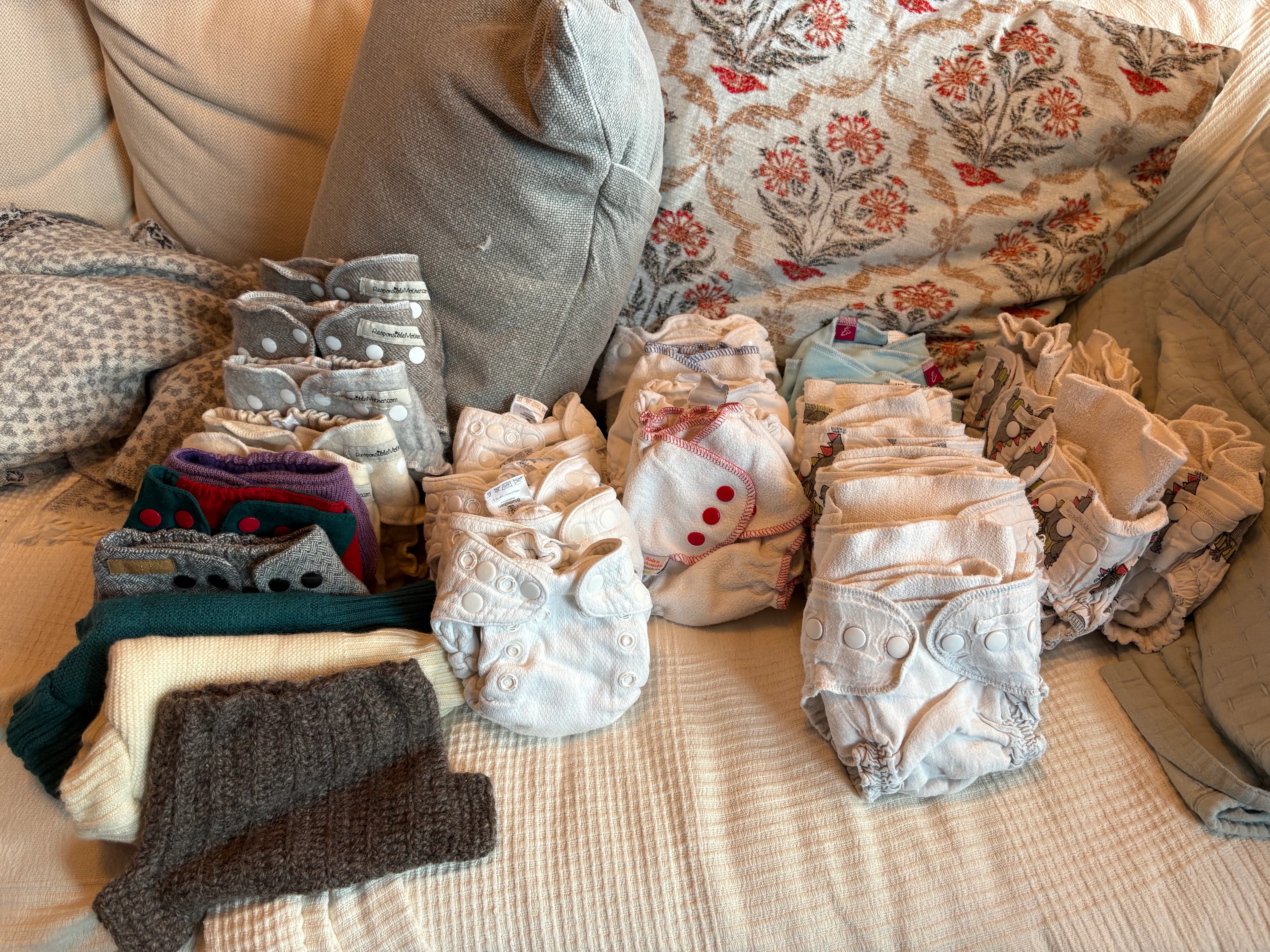
Finding cloth diapers made entirely of natural fibers has taken up quite a few hours of my life. Something looks promising, the description says “organic cotton,” and then I look at the actual fabric composition and find polyester mixed in. If you care about using only natural fibers on your baby’s skin, you really do have to read the details.
After more than five years of using cloth diapers with three kids, I have quite a few opinions about which ones are worthy of place in my stash. Some have fit one of my babies beautifully and another barely at all. Some I like much better folded up inside a different diaper than used as a diaper on their own.
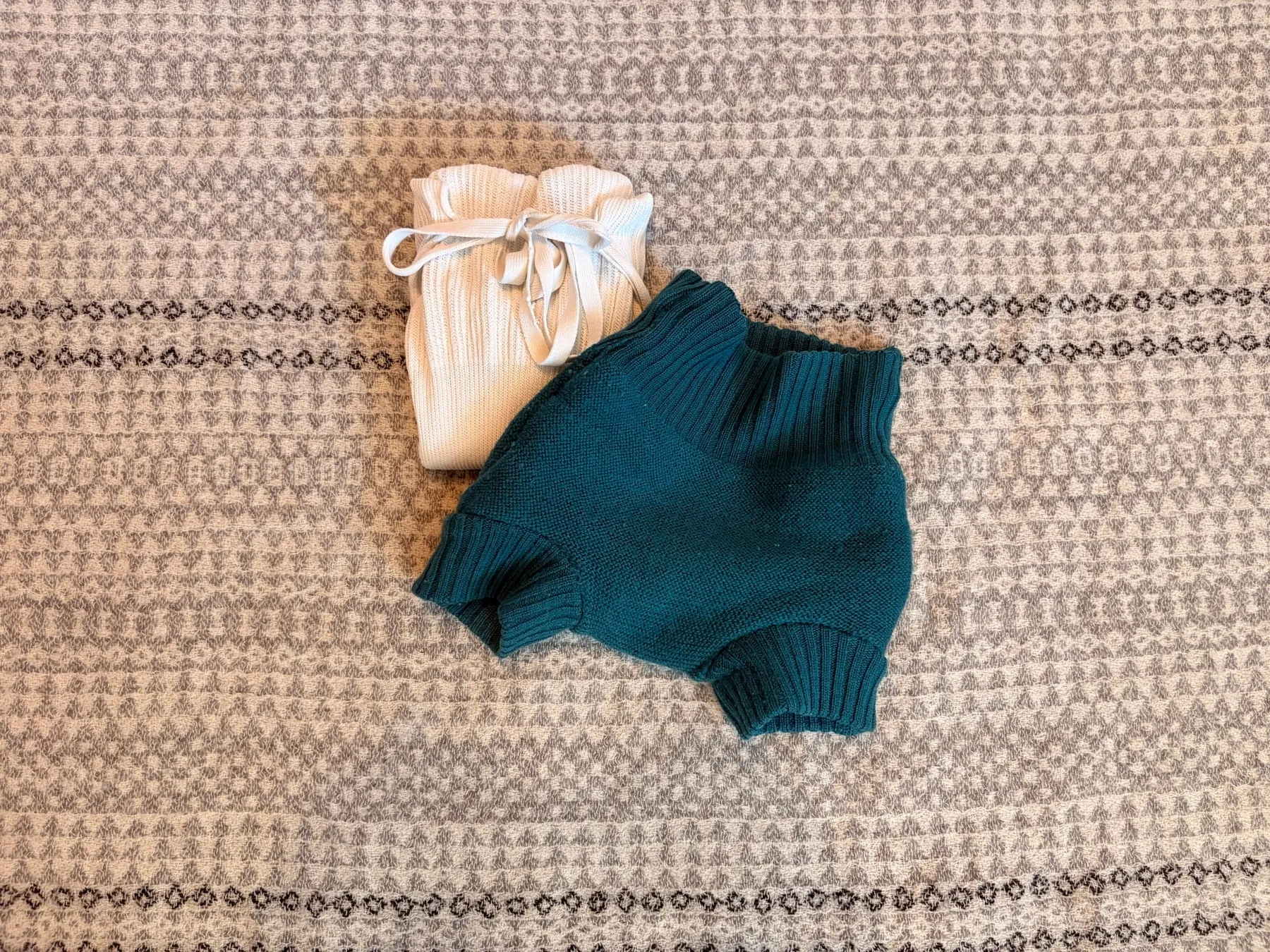
But my Disana tie nappies have been used for three kids so far and are still going strong. I love them so, so much. They are among my favorite diapers for newborns, and they are useful well beyond those first few months, too.
A long piece of cotton, with ties
If you haven’t come across a tie nappy before, it is made of one long piece of knitted cotton, with attached ties to fasten it around your baby. You fold it to precisely the size to fit your baby, bring it up between baby’s legs, and tie it on.
The Disana nappies are 100% organic cotton, and the ties mean there is no need for a separate Snappi fastener like you need for a flat or prefold. Not only that, it’s one less thing to remember to pack in the diaper bag! I really appreciate having the fastening be part of the diaper itself.
You do need a cover over the cotton nappy, since it doesn’t have a waterproof outer layer. I use wool covers. The nappy absorbs the pee, and the wool cover keeps it from getting onto clothes and bedding.
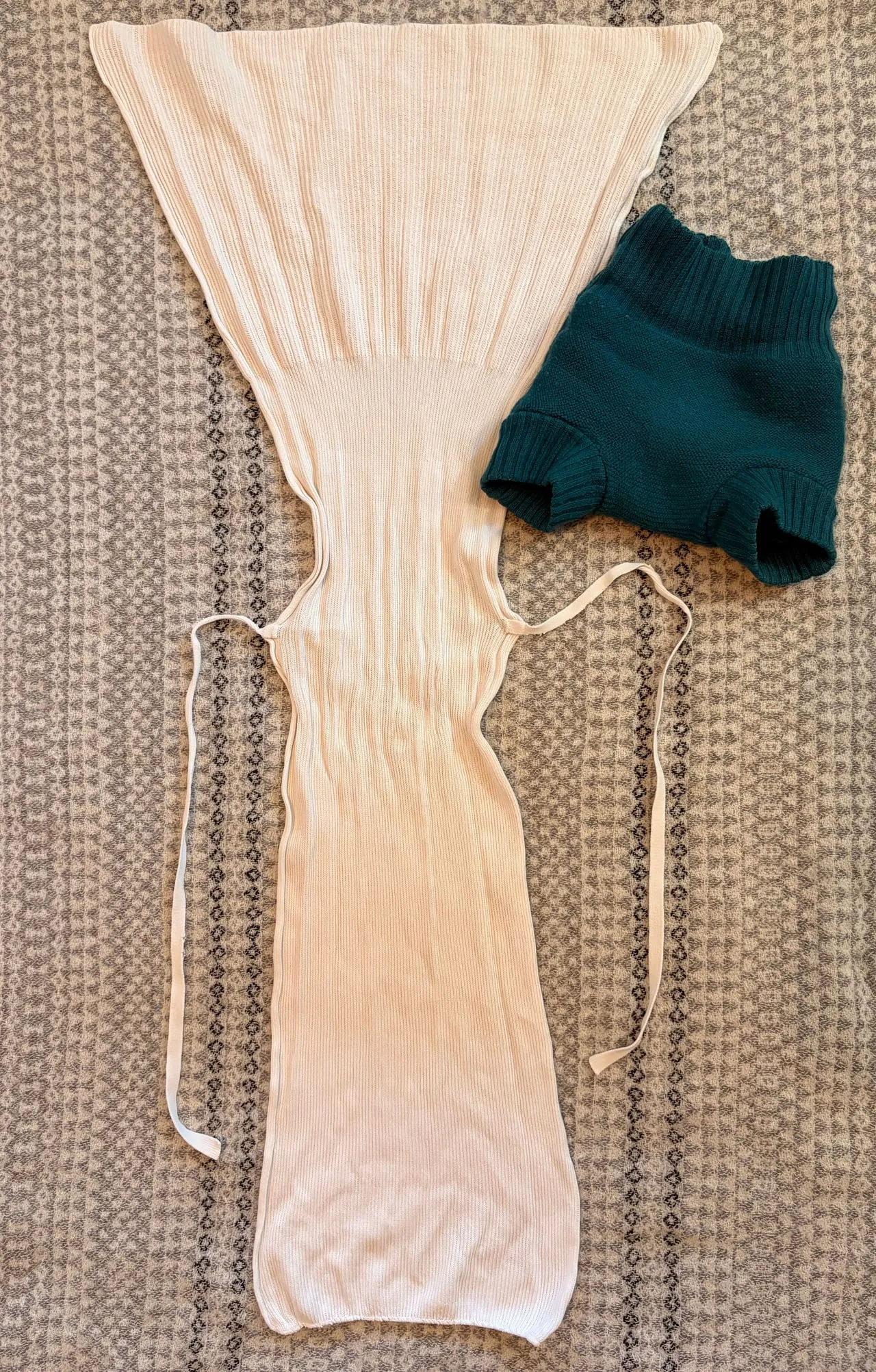
Because the cotton is knit, it is stretchy in one direction and flexible to fit around your baby. You can fold it in numerous different ways according to your baby’s size, where they tend to wet the diaper, and how you prefer to put it on. In fact, my favorite way to fold this diaper for a newborn is one I made up myself - I haven’t seen anyone else do it quite like me. This is a big part of why I like them: there is quite a lot you can adjust before deciding the diaper does not work for you.
How I like to put them on a small baby
For a smaller baby, I like to fold the nappy “backwards,” so the ties end up on the bottom, underneath baby. Then I can just bring them up and tie them in the front.
With the usual fold, the ties start at the front, and you need to wrap them around and underneath baby before bringing them back to tie in front. I prefer the backwards version for a little baby. It is a small change, but it makes putting the diaper on easier for me, especially for a wiggly baby!
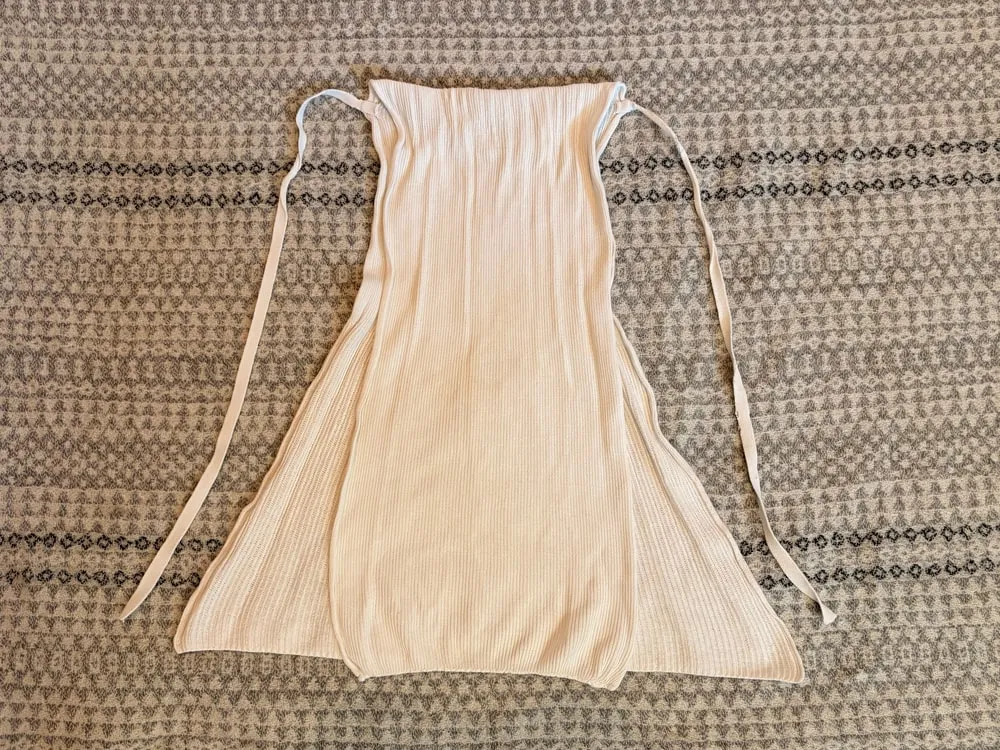
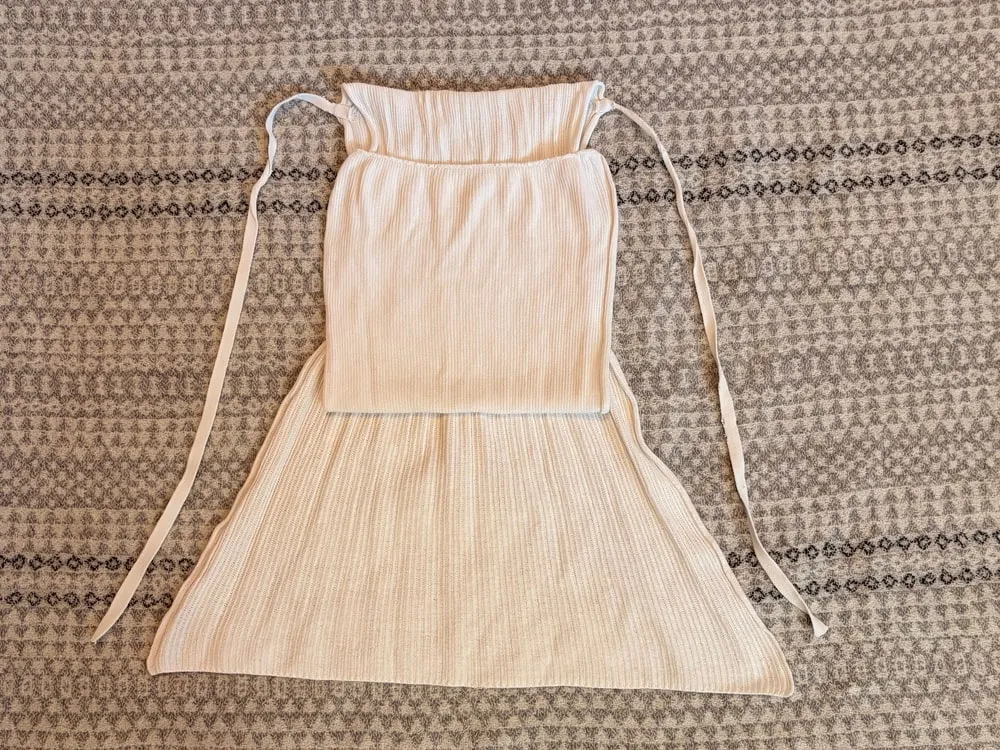
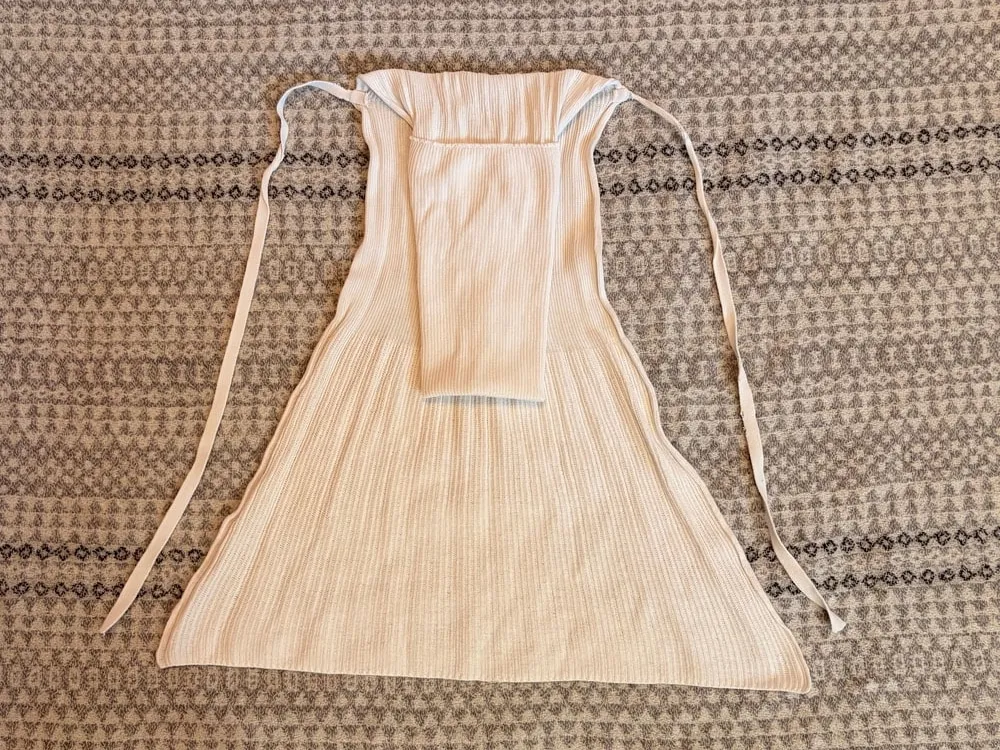
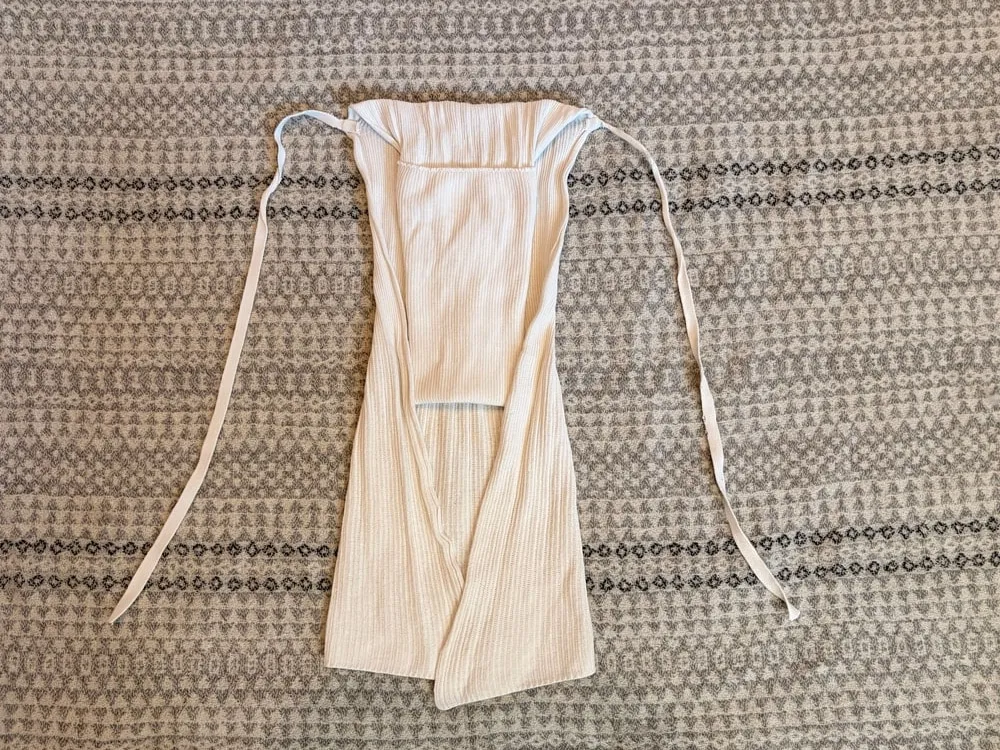
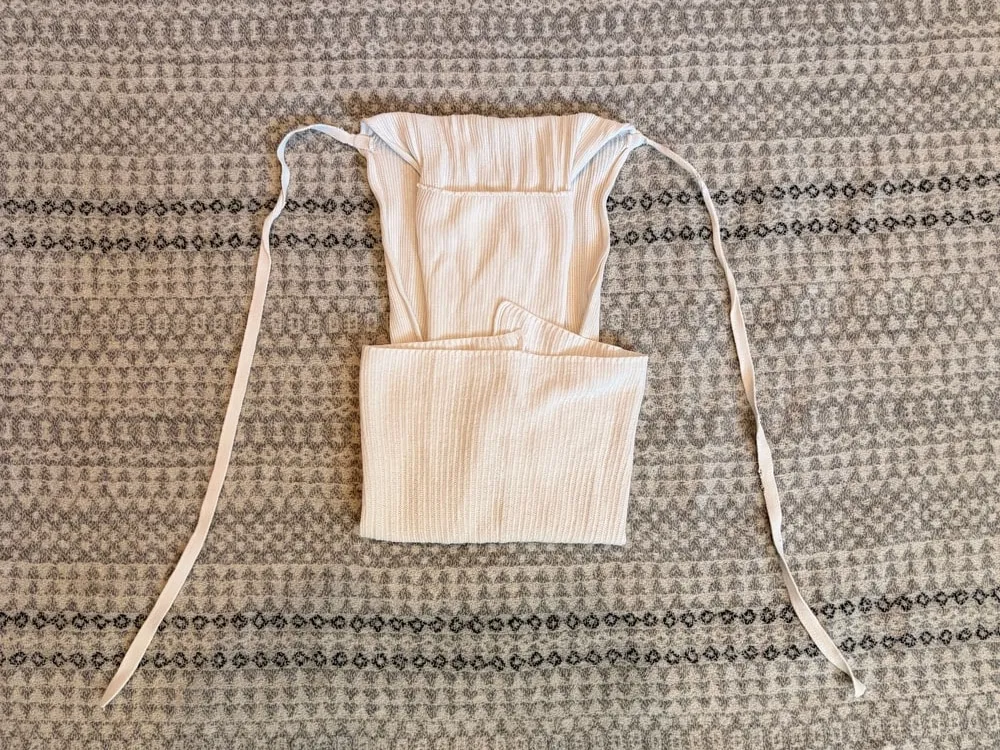
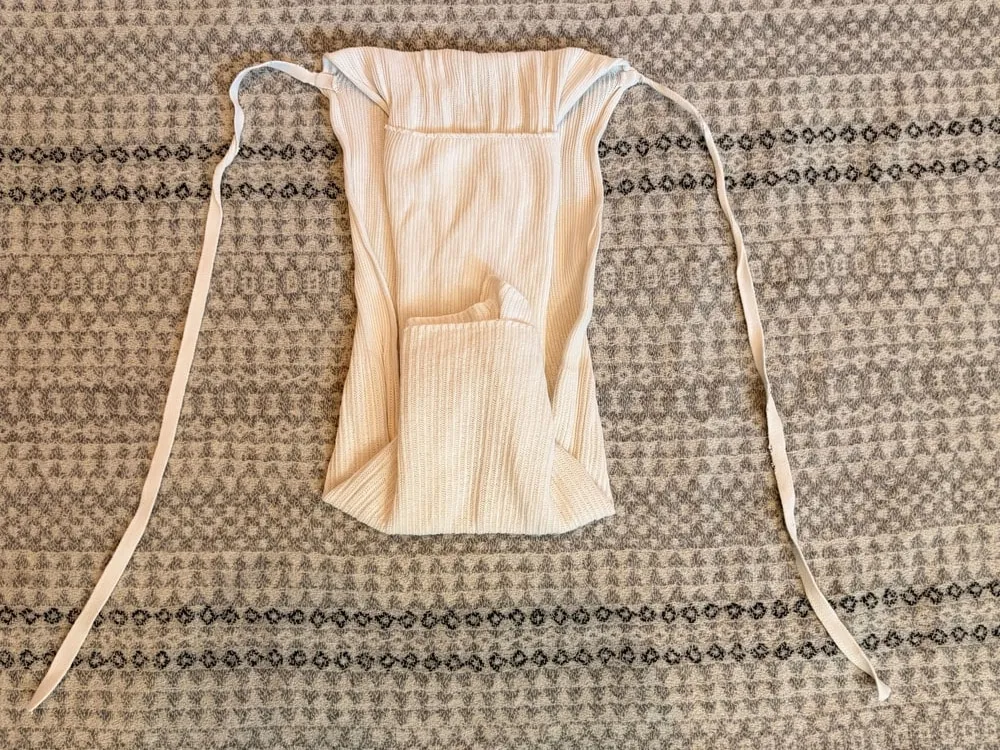
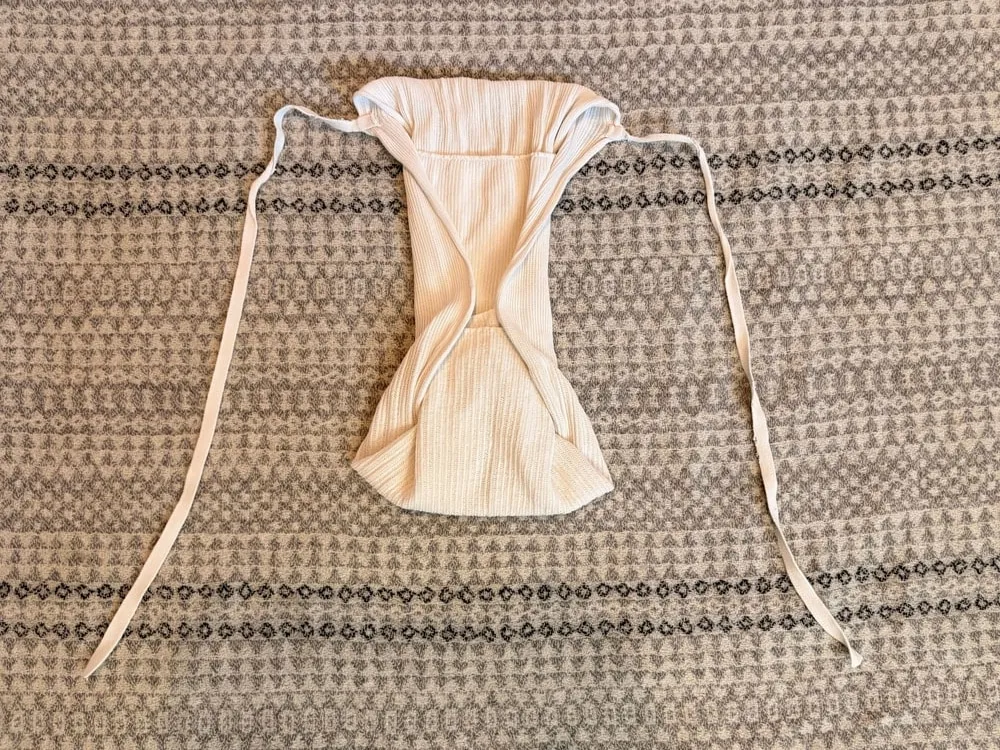
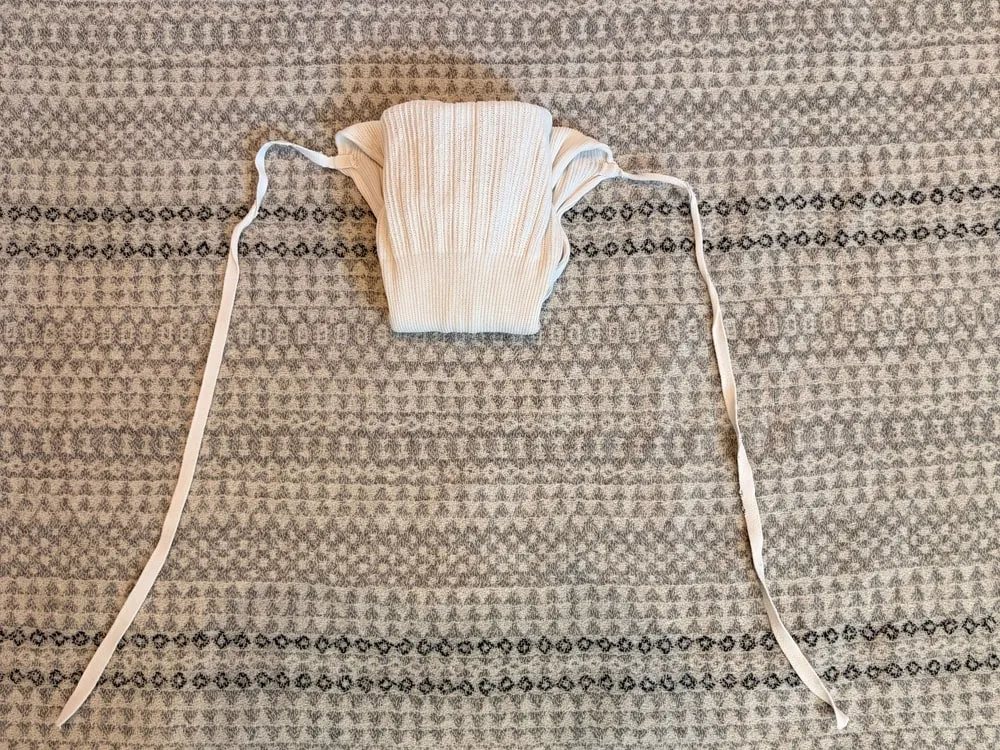
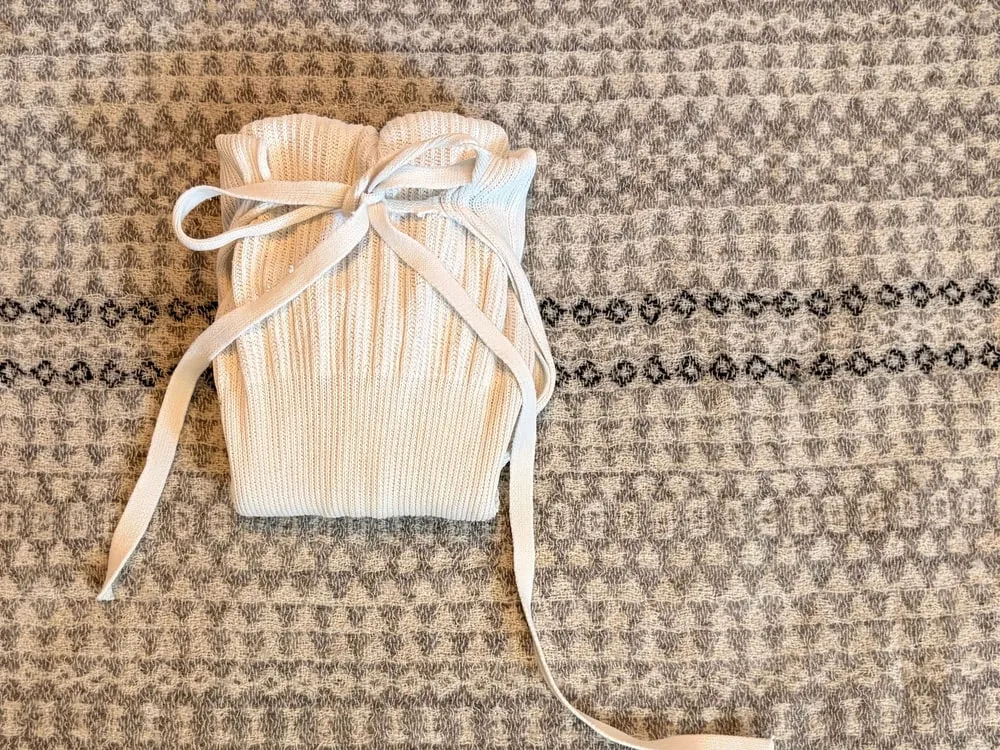
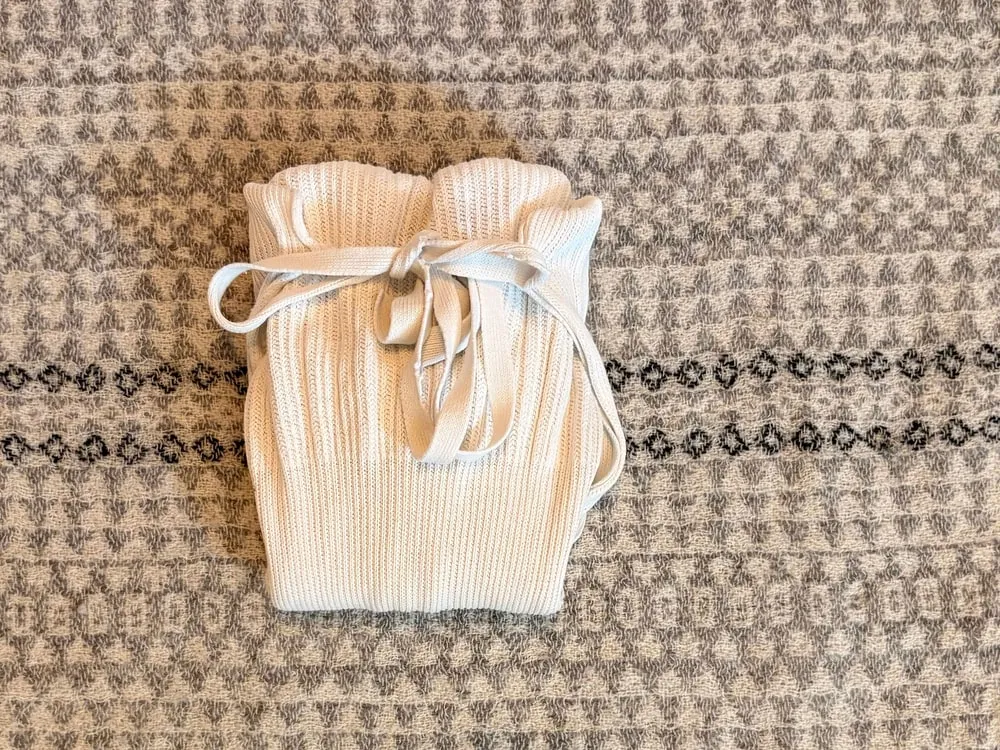
Folding it backwards also makes it easier to make the whole diaper narrower, which is critical for a good fit on a small baby. A wide diaper on a newborn is too bulky and not only is difficult to put on, but also is not very comfortable for the baby. Also remember to tuck in the hanging ends to prevent them sneaking out of a leg hole and causing a leak.
The folding does mean there is a bit to learn at first. But you don’t need to learn every possible way to fold one. You can find an arrangement you like and adjust it as your baby grows.
Room for more absorbency
One of my favorite things about tie nappies is how easy it is to add extra absorbency. You can use a flat, a booster, or whatever extra cotton or hemp fabric you have. I have even used those cotton terry towels from IKEA, of which we have approximately a million, in a pinch. Since there is no pocket, you are just folding the diaper around the extra layers. No stuffing your hand in a too-narrow pocket or getting your hand stuck to the inside of a sticky PUL layer.
Being able to easily add extra absorbency makes them particularly useful at night, when, depending on your child, you may need quite a significant amount of absorbency to prevent leaks.
Many more structured cloth diapers, even dedicated fitted “Night Nappies,” don’t work very well heavily stuffed. Adding enough absorbency can make the leg openings gape, or make it difficult to close the diaper around the baby at all. The tie nappy’s design gives me much more room to work with, because I can change the fold to accommodate what I am adding.
With my older kids, I needed to add a small booster past the newborn stage even for daytime use. My youngest is still using these without any extra absorbency at six months old, though, even at night. We do practice elimination communication (EC), though, so her diapers are primarily for backup and generally only get a small amount of pee in them, even at night. That makes quite a difference to what we need from a diaper!
I like being able to keep using the same nappy and change what goes inside it as needed. A diaper that fits a newborn doesn’t have to stop being useful just because the baby starts peeing more.
Disana and Popolini: I’ve used both
Before my third child was born, I bought some Popolini tie nappies as well. They are very similar to the Disana ones, and are also made of 100% organic cotton.
The Popolini cotton feels a bit thicker to me. However, since these nappies are newer and haven’t had nearly as much wear as my Disana ones, this could be partially due to the number of washes they have experienced. That said, my impression is that they are slightly thicker than I remember the Disana nappies being when new.
The only other difference I notice is that the narrower straight part of the diaper that folds on top of the other half is slightly shorter than that of the Disana nappy. Otherwise they are almost identical, with the same overall length. The same things I like about flexibility with folding, adding absorbency, and using them at night apply to both.
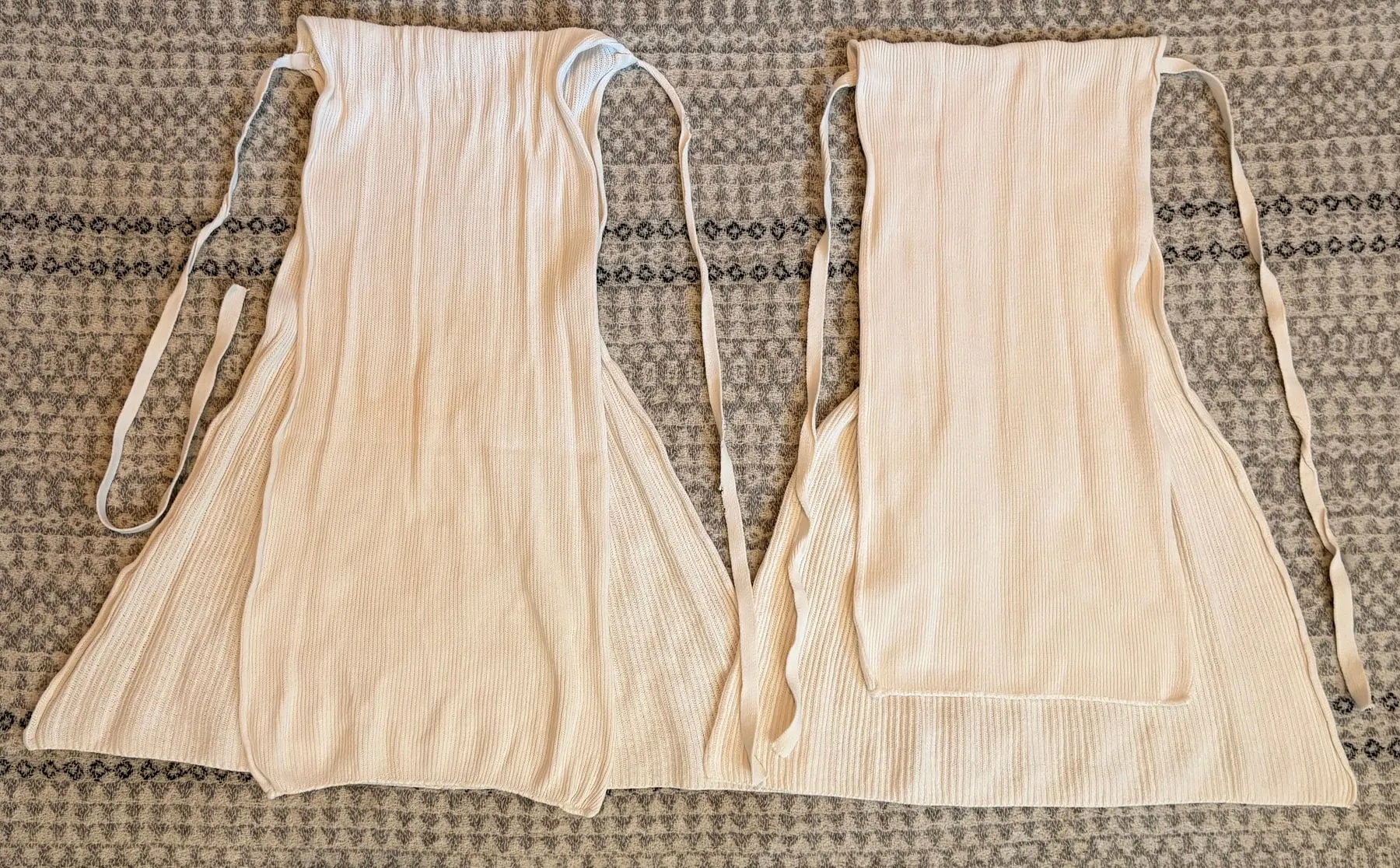
The Disana ones are the nappies I can personally say have lasted through three babies. I’m still finding out how the Popolini ones hold up over that much use, but I expect they will be just as durable if not more considering their slightly thicker fabric.
A couple of things to know beforehand
These did need quite a few washes before they absorbed well. My Disana nappies were still repelling liquid after three or four washes, and I had to do a wash cycle at 90 Celsius before they were ready to use. The Popolini ones needed the same treatment. So I would plan in advance to allow time for several hot washes before attempting to use them as diapers. You can test them by pouring a small amount of water on them to see if it absorbs. If it beads up, they need more washes.
Once folded, they are just as easy to put on as any other diaper, although some people may find them a bit intimidating at first. It doesn’t need to be put on “perfectly” to work well, and after a bit of practice (of which you will get a LOT of with a newborn), you’ll get the hang of it.
If you are looking for a 100% cotton diaper for your baby and don’t mind a little folding, I think tie nappies are well worth considering. They are good balance between price, simplicity, and longevity. Mine have earned their place in the laundry pile through three babies, and I intend to keep using them for as long as we need them.