Cloth diapers have a reputation for being eco-friendly, better for both the environment and babies—but what are they made of, really? Are the materials used in cloth diapers really any better than the default disposable diaper options?
Even before my first child was born, I knew I wanted to use cloth diapers instead of disposables. Between the environmental impact of disposable diaper manufacturing and their extremely long decomposition time, a desire for more natural materials touching my baby’s skin, and saving money, the choice was easy. Finding the right diapers, on the other hand, was quite the challenge. I scoured every cloth diaper webstore available to me looking for the perfect system that fit my strict criteria.
Cloth diapers are an increasingly popular alternative to disposable diapers. Proponents cite benefits of cloth diapers like sustainability, lower overall cost, and a preference for gentler, more baby-friendly materials amongst other things. Additionally, many parents fall in love with the cute prints available. But what many people don’t realize or stop to think about is that most modern cloth diapers are made almost entirely of synthetic materials, mostly plastics. I chose to purchase only diapers with 100% natural fiber inner layers, but neglected to consider the fact that the typically used outer waterproof layers may still be problematic.
So while cloth diapers of all sorts certainly reduce waste and are more budget-friendly, modern cloth diapers maintain our reliance on plastic and other synthetic materials which may pose unwanted health and environmental risks.
What Materials Are Typically Found in Diapers?
Disposable Diapers
Disposable diapers are usually made of a combination of synthetic materials, primarily:
- Polypropylene and/or polyethylene usually make up the inner and outer surface.
- Cotton may be used for the inner layer touching baby’s skin for a few premium brands.
- Superabsorbent polymer (usually sodium polyacrylate) is a substance comprised of gel-like beads that absorbs a large amount of liquid.
- Wood pulp or cellulose are used to help distribute liquid throughout the inner absorbent layer.
- Polyurethane is used to make the legs and waist elastic.
- A variety of adhesives are used to bind together the different layers of the diaper, including but not limited to hot-melt adhesives like ethylene-vinyl acetate, amorphous polyalphaolefins, and styrene block copolymers, and pressure adhesives from synthetic rubber or acrylic.
- Dyes, lotions, and fragrances may also be included.
Modern Cloth Diapers with Built-In Waterproofing
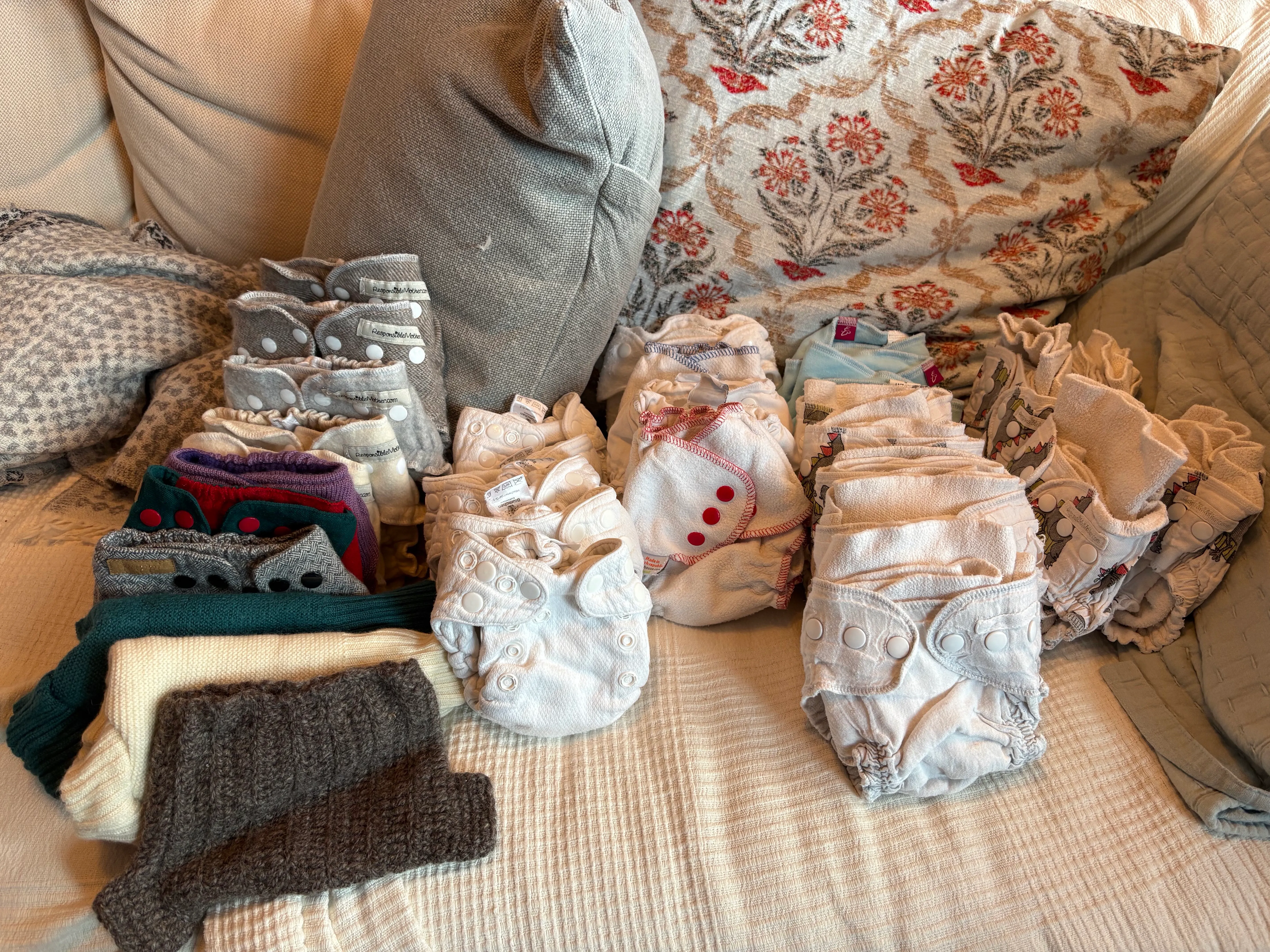
In comparison, the most recommended cloth diapers are those with a built-in waterproof layer. Pocket diapers are the most popular option and are composed of a diaper-shaped shell with a pocket that can be stuffed with absorbent material and used almost the same way as a disposable diaper. “All-in-one” diapers (AIOs) are similar, except that the absorbent layers are sewn in or snap into the diaper.
The different materials commonly used in modern cloth diapers include:
- Polyurethane laminate (PUL) or thermoplastic polyurethane (TPU) as the outer waterproof layer, either built in, like for pockets or AIOs, or as a separate cover.
- Polyester in the form of fleece, suedecloth, or athletic wicking jersey as the inner, moisture-wicking layer against baby’s skin.
- Microfiber is commonly used for the absorbent inner layer.
- Cotton, hemp, and bamboo may be used for the absorbent layers in some brands and models, although many models blend polyester into these materials in varying percentages.
Plastic-Minimum Cloth Diapers
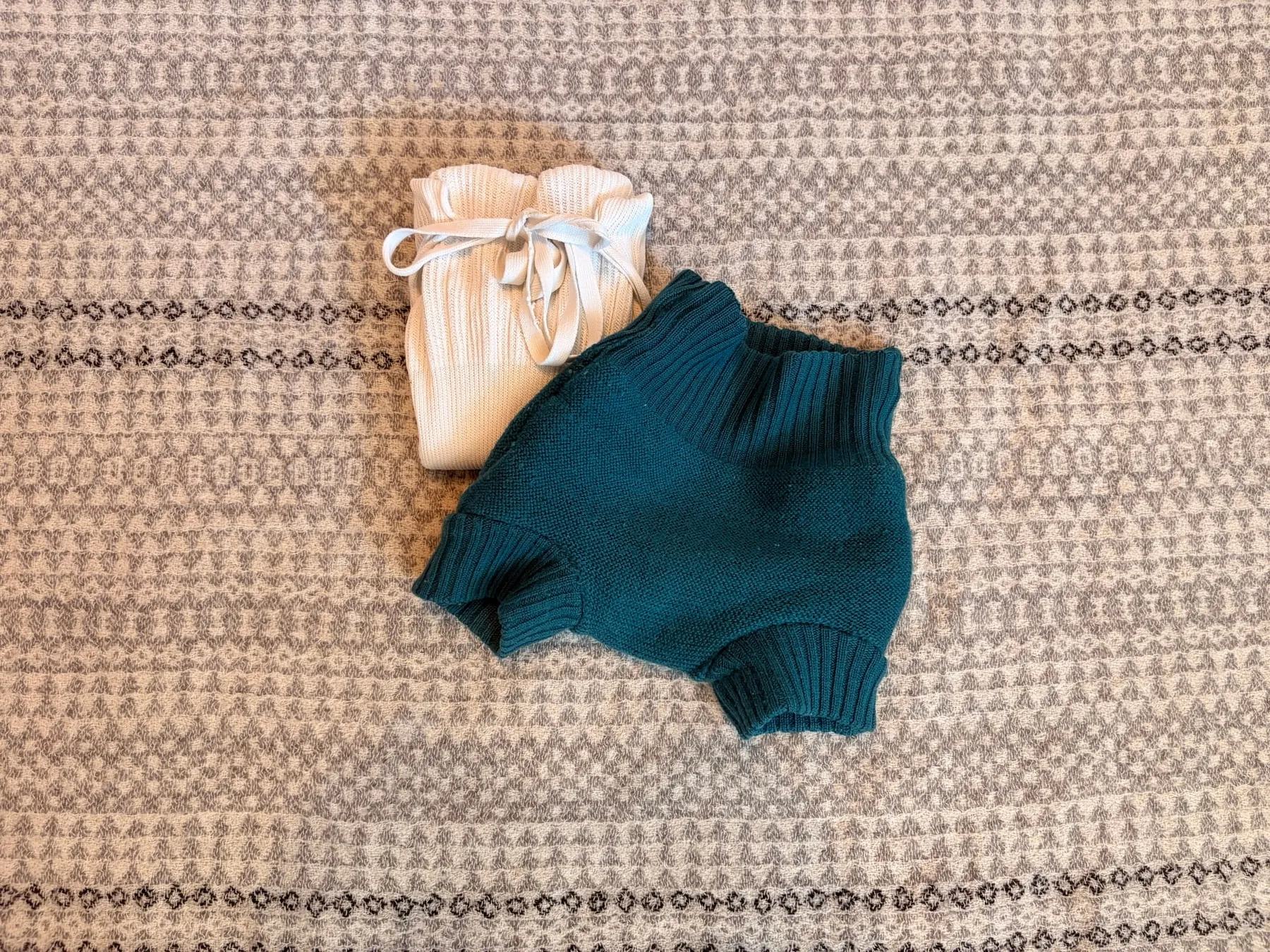
Alternatively, it is entirely possible to avoid plastic by using more traditional cloth diapers such as flats, prefolds, or fitteds with a wool cover.
- Flats are square pieces of cotton fabric measuring approximately 80 × 80 cm that must be folded in a variety of ways before putting the diaper on the baby and securing it, often with a special clip called a Snappi (which is plastic).
- Prefolds consist of three equal-sized sections of cotton, with the inner section being the thickest and most absorbent. It is easy to either fold it in thirds and place it inside a cover, or fold the front and put it on the baby, again securing it with a Snappi.
- Fitted diapers are sewn into the shape of a diaper like pocket diapers and all-in-ones, but do not have a waterproof outer layer.
For all of these options, you can use an outer cover made of wool. Wool is naturally moisture-resistant, and when coated in a lanolin emulsion becomes extremely leak-proof. For this reason, wool covers are a popular choice for night diapers.
So, are cloth diaper materials really better? I think the clear answer is still yes, but only if you choose the non-default option, as the materials used in disposable and cloth diapers are more similar than one might expect. While reusing diapers is still better than throwing them in the trash just to sit in a landfill for hundreds of years, typical cloth diapers are still made almost entirely of plastics and will still expose your baby, family, and the groundwater to harmful substances. The good news is that better options do exist-and they are the most affordable and easy to use with just a bit of practice!